
Banning Credit Card Surcharges
The Albanese Government, in conjunction with the Reserve Bank of Australia, has delivered a ban on card payment surcharges effective 1 October 2026, ending a system that cost Australian consumers $1.6 billion annually.
Cost of living
Term 2
Surcharging was introduced more than two decades ago to steer consumers toward cheaper payment methods. As of 2025, however, cash accounts for just 13% of in-person transactions, and businesses had increasingly applied the same surcharge rate across both debit and credit cards regardless of actual processing costs, undermining the regime's original purpose. A CHOICE survey found 76% of consumers wanted surcharging to stop, with 66% reporting they had been charged surcharges without adequate prior disclosure.
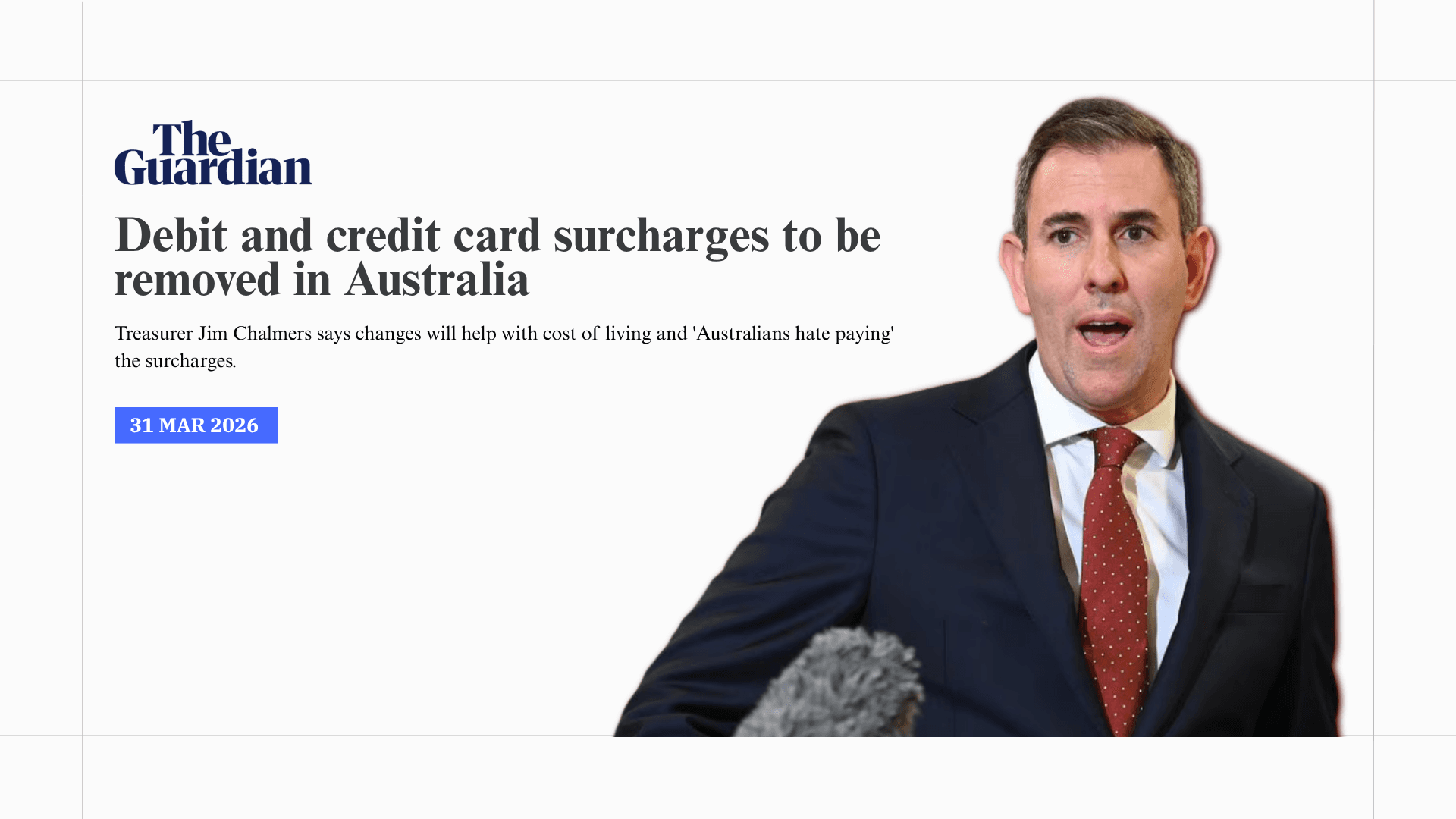
What Changed
Following a year-long review, the RBA's Payments System Board published its Conclusions Paper on 31 March 2026. Surcharges on debit and credit card payments across EFTPOS, Mastercard, and Visa networks will be prohibited from 1 October 2026. The ban covers both in-person and online transactions. American Express direct-issued cards remain exempt and will be subject to a separate future review. Most businesses (approximately 88% of small merchants and 88% of large merchants) do not currently surcharge and are unaffected.
Interchange Fee Reductions
The surcharge ban is paired with mandatory cuts to interchange fees, which are the fees merchants pay to card networks and banks on each transaction:
The cap on consumer credit card interchange fees is cut from 0.8% to 0.3% of transaction value
New caps are introduced on foreign-issued card transactions
Caps on interchange fees for debit cards are also reduced
Changes to foreign card caps and payment cost transparency take effect 1 April 2027
The RBA estimates the interchange reductions will lower business payment costs by approximately $900 million annually, with smaller businesses (which disproportionately pay fees closer to the cap) benefiting most.
Transparency Measures
Payment service providers will be required to publish average merchant fees, enabling businesses to benchmark and compare costs. Merchants must receive standardised information on their statements to simplify switching between providers. Card networks must simplify the scheme fees they charge, reducing complexity for businesses attempting to manage costs.
Total Consumer Savings
Combined savings from removing surcharges ($1.6 billion) and reducing interchange fees ($900 million) are estimated at $2.5 billion annually. The RBA has noted that if businesses absorb surcharge removal costs into product prices rather than cutting margins, this would raise consumer prices by approximately 0.1 percentage points, a manageable trade-off the Payments System Board concluded was in the public interest.
Impact on Credit Card Rewards
Banks stand to lose approximately $660 million in interchange revenue annually under the reduced caps. Major banks have indicated this may result in lower credit card reward earn rates, reduced sign-up bonuses, or cuts to frequent flyer point values, particularly on premium credit cards. The RBA acknowledged this trade-off but held firm on the interchange cuts in the face of bank lobbying.
Government Role
The Albanese Government flagged its intention to ban debit card surcharges from 1 January 2026 in October 2024, subject to the RBA review. In the interim, it removed surcharges on payments to the ATO and Services Australia from 1 January 2025 after advice that Commonwealth agency surcharging was likely unlawful without a specific legislative basis. The Government introduced the Commonwealth Entities (Payment Surcharges) Bill 2024 to formalise this position retrospectively from 1 January 2003. The final RBA decision extends the ban to the broader economy, covering both debit and credit cards.
Next Steps
The RBA will commence public consultation in mid-2026 on areas not covered by this review, including mobile wallets (Apple Pay, Google Pay), buy now pay later services, three-party card networks, and e-commerce platforms.
[1] RBA Conclusions Paper, March 2026
[2] Capital Brief
Updated: