
Banning Supermarket Price Gouging
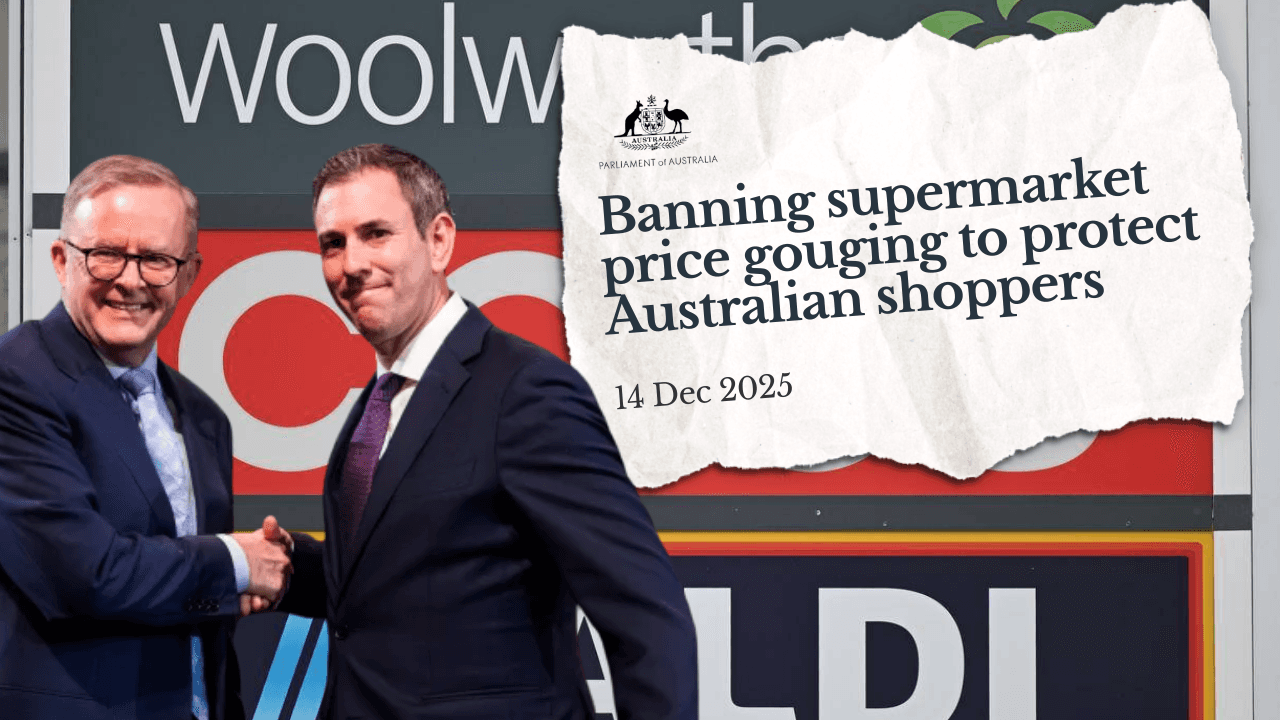
Major retailers to be prohibited from charging excessive grocery prices under new consumer protection laws.
Cost of living
Term 2
The ban prohibits very large retailers from charging prices that are excessive when compared to the cost of supply plus a reasonable margin, addressing a key gap in Australia's consumer protection framework. The Australian Competition and Consumer Commission (ACCC) found in its supermarkets inquiry that Coles and Woolworths have limited incentive to compete vigorously on price, with their market dominance likely to continue.
Retailers breaching the price gouging ban face maximum penalties of $10 million per breach, three times the value of the benefit derived, or 10 per cent of the company's turnover during the preceding 12 months, whichever is greater. The ACCC will be responsible for policing the regime. The ban forms part of broader government action on supermarket competition, including making the Food and Grocery Code mandatory from 1 April 2025, increasing ACCC funding by over $30 million to address misleading conduct in the supermarket and retail sectors, and strengthening the Unit Pricing Code to tackle shrinkflation.
Additional measures include implementing ACCC recommendations to improve transparency about prices and loyalty programmes, funding CHOICE to provide shoppers with price information, investing $50 million for food security in remote First Nations communities, ensuring ACCC notification of supermarket sector acquisitions and land purchases, and making it easier for new supermarkets to enter the market through the revitalised National Competition Policy backed by the $900 million National Productivity Fund.
Key outcomes:
Price gouging by major retailers banned from 1 July 2026
Maximum penalties of $10 million, three times the benefit, or 10 per cent of annual turnover per breach
ACCC granted enforcement powers with over $30 million in additional funding to address misleading supermarket and retail conduct
Updated: