Getting inflation back under control
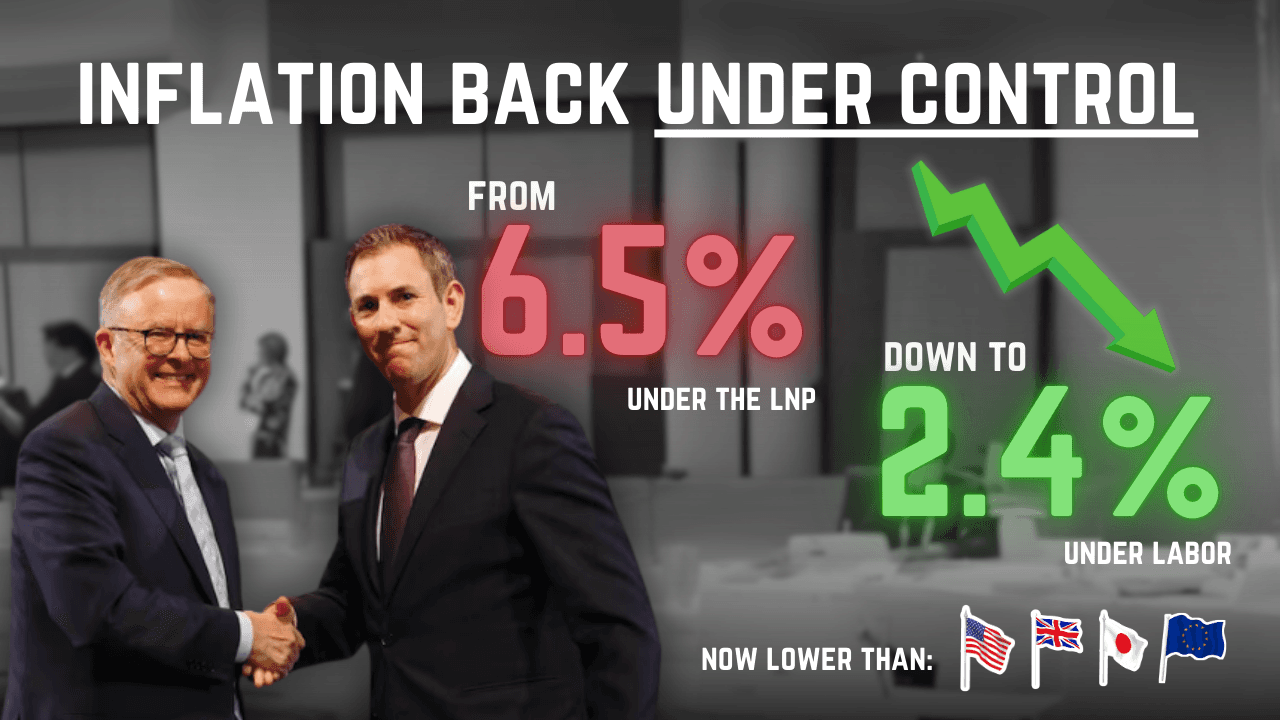
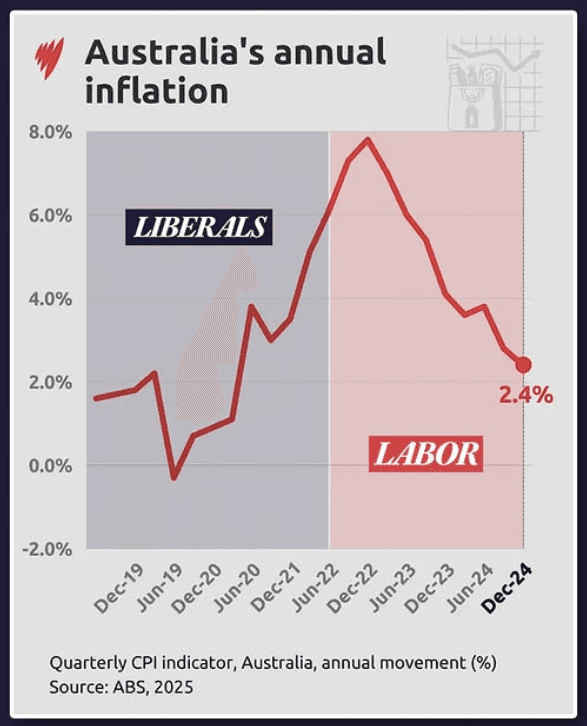
The Albanese Government has helped drive inflation to its lowest level in almost four years, with headline inflation now sitting at 2.4% - down from the 6.1% inherited from the previous government.
Economy
Term 1
Through responsible economic management, Labor has achieved a significant turnaround in inflation. The December 2024 quarter figures show headline inflation at 2.4%, placing it firmly within the RBA's target band of 2-3%. Underlying (trimmed mean) inflation has fallen to 3.2%, its lowest level in three years, while six-month annualised underlying inflation is now at 2.7% - the first time it's been within the target band since 2021.
This progress has been supported by the government's targeted cost of living measures. Government data shows these policies reduced inflation by about three-quarters of a percentage point. For example, electricity prices fell 25.2% over the year (compared to a 1.6% fall without energy rebates), while rent increases were moderated by the largest boost to Rent Assistance in 30 years.
Australia's inflation rate is now lower than most major advanced economies including the United States, United Kingdom and Germany. Importantly, this has been achieved while maintaining low unemployment and strong job creation - what Treasurer Jim Chalmers calls a "soft landing." As he notes, "The worst of the inflation challenge is well and truly behind us," though the government remains "confident but not complacent."
Update 09/26
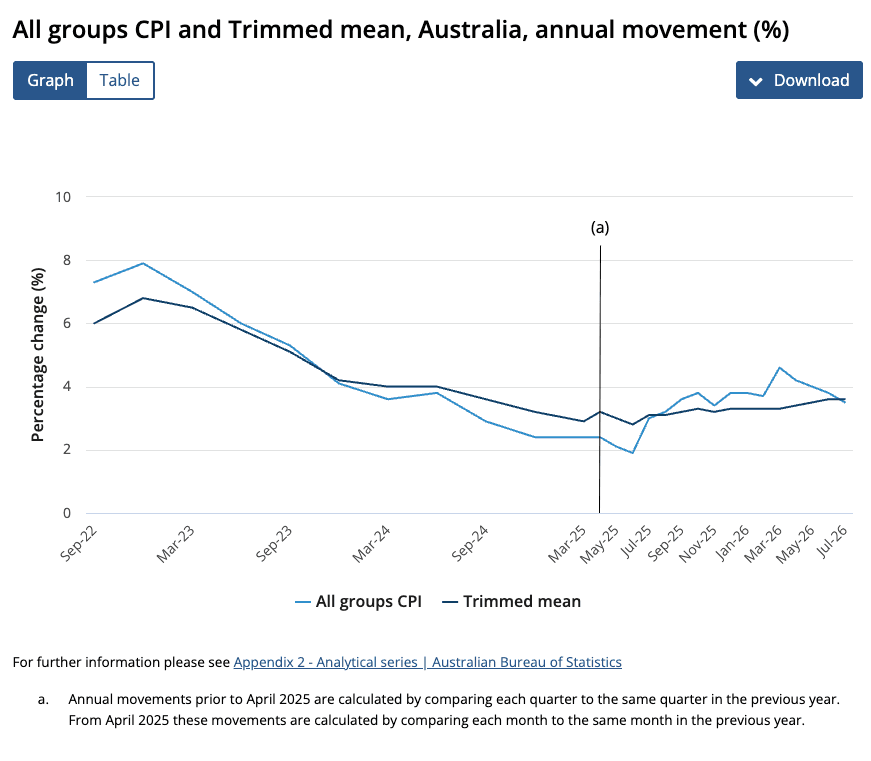
Inflation has risen over the past year, sitting at 3.5 per cent in the 12 months to July 2026, with the trimmed mean unchanged at 3.6 per cent for a third month. The ABS and the Reserve Bank attribute the increase to three things: the wind-down of Commonwealth and state electricity rebates, which left electricity prices 25.4 per cent higher over the year to March 2026; higher fuel and energy costs following the outbreak of conflict in the Middle East in February; and persistent domestic services inflation. Australia remains below the OECD average of 4.2 per cent and the G20 average of 4.1 per cent, and the Government has responded with $2.9 billion in temporary fuel excise relief and a $3.2 billion fuel security reserve.
[1] https://ministers.treasury.gov.au/ministers/jim-chalmers-2022/media-releases/underlying-inflation-falls-three-year-low
[2] https://www.rba.gov.au/inflation-overview.html
[3] https://www.abs.gov.au/statistics/economy/price-indexes-and-inflation/sort
[4] https://www.abc.net.au/news/2024-10-30/inflation-australia-third-quarter-cpi-interest-rates-rba/104535382
[5] https://www.theguardian.com/business/2025/jan/29/australias-underlying-inflation-rate-falls-to-32-to-bolster-case-for-rba-rate-cut-next-month
[6] https://www.instagram.com/p/DGSDhkzsYhs/?utm_source=ig_web_copy_link&igsh=MzRlODBiNWFlZA==
Updated: