
Fixing our relationship with China
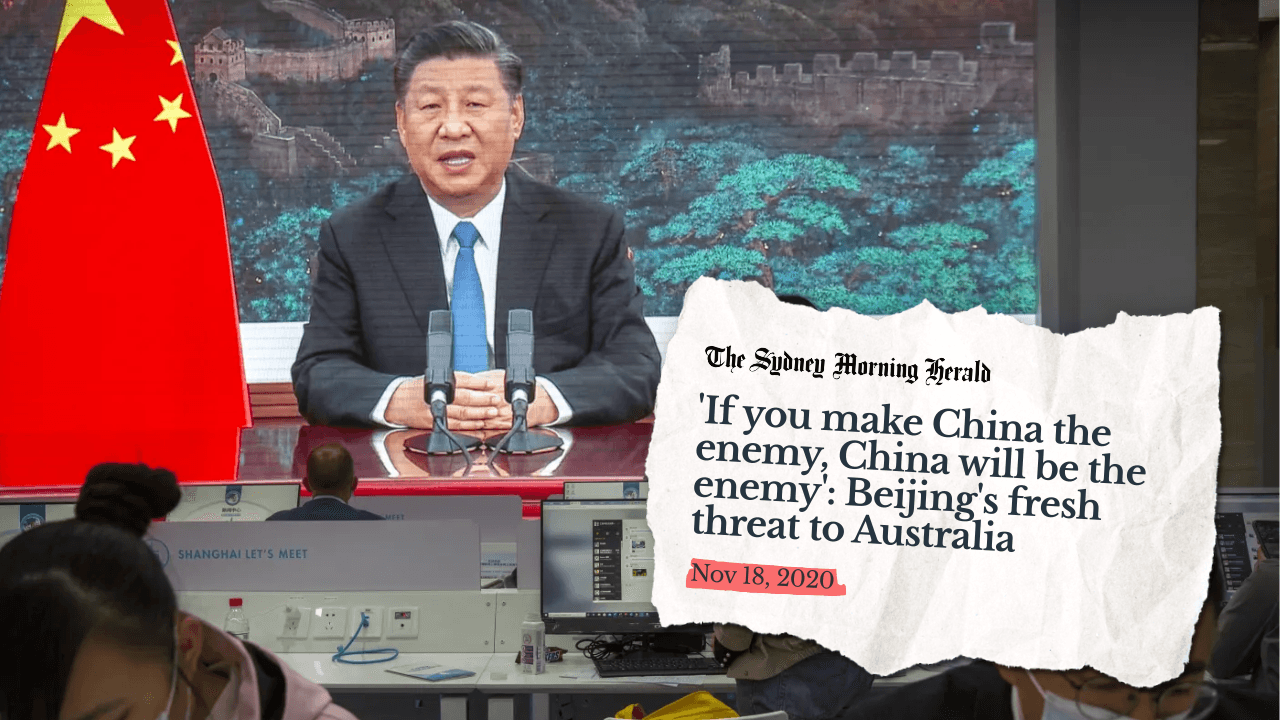
When Labor took office in May 2022, Australia-China relations sat at their lowest point in decades. China had imposed punitive trade restrictions worth approximately $20 billion annually, refused ministerial contact for three years, and bilateral relations had frozen. The previous Coalition government's confrontational approach had delivered economic pain without strategic gains.
Foreign Affairs
Term 1
When Labor took power, it inherited a hostile relationship with China from the Coalition Government's years of mismangement:
Labor's strategy represented a deliberate shift: maintain Australia's positions on values and security but change the tone and prioritise diplomatic engagement. The framework was clear: cooperate where we can, disagree where we must, and engage in the national interest.
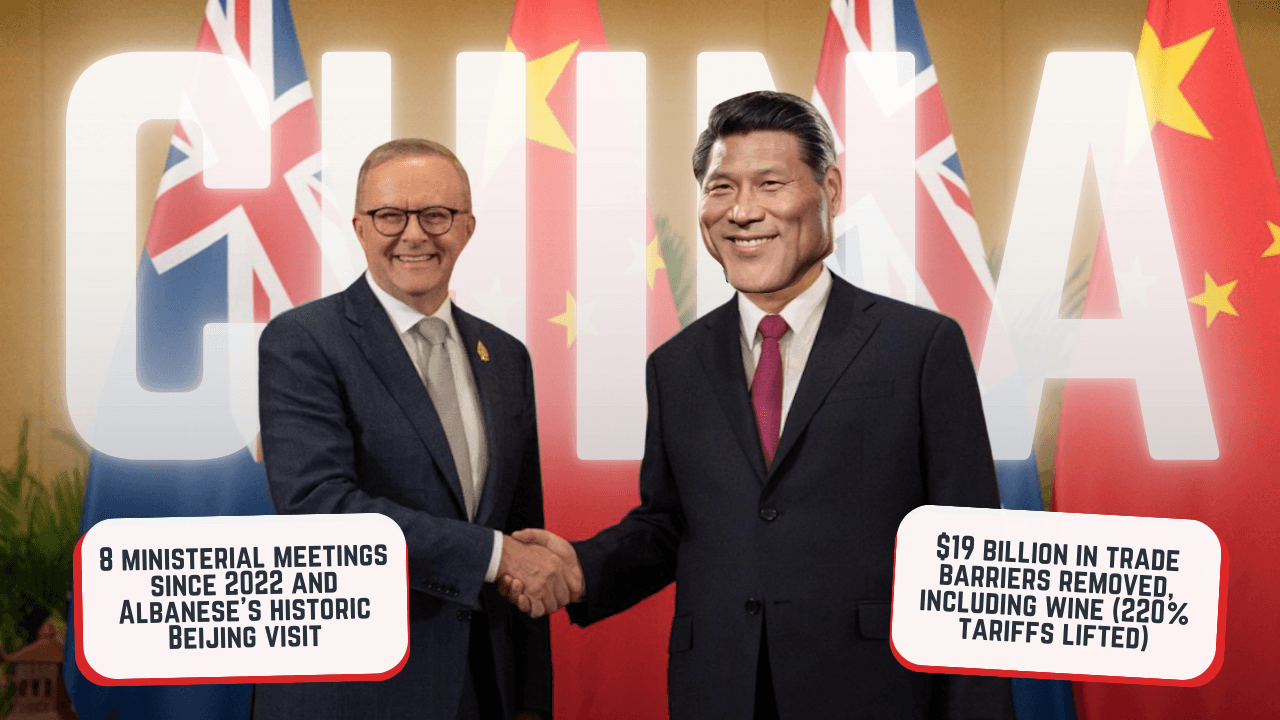
The breakthrough came in November 2022 when Prime Minister Albanese met President Xi Jinping at the G20 summit in Bali, the first meeting between an Australian prime minister and Chinese president since 2016. This restored high-level dialogue without compromising Australia's interests or values.
Trade restrictions then lifted progressively. Barley tariffs were removed in August 2023, restoring a market worth hundreds of millions annually. Timber restrictions eased in October 2023. Coal restrictions ended in late 2023. Wine tariffs lifted in March 2024, with exports to China recovering from $14 million in 2023 to $877 million in 2024. By December 2024, total Australian wine exports reached $2.55 billion, a 34% increase driven by China's return as the largest market.
Bilateral trade in goods and services reached approximately $312 billion in 2024, with China accounting for roughly one-quarter of Australia's total trade. China remained Australia's largest trading partner by substantial margin.
Albanese visited China twice as prime minister: November 2023 and July 2025, becoming the first Australian leader to visit since 2016. The visits focused on economic cooperation, particularly in climate-related areas including steel decarbonisation and green economy development, whilst maintaining dialogue on areas of disagreement.
Critically, Labor maintained positions Beijing opposed. Australia proceeded with AUKUS implementation, continued South China Sea freedom of navigation operations, acquired long-range strike weapons including Tomahawk cruise missiles, and expanded US military presence including B-52 bomber facilities. The government demonstrated that economic cooperation and security deterrence were complementary, not contradictory.
The stabilisation represented significant diplomatic achievement. Restoring $20 billion in annual trade, resuming ministerial dialogue, and achieving multiple Xi-Albanese meetings exceeded expectations. The approach validated that tone matters in diplomacy even when positions remain constant, and that Australia could maintain security commitments whilst improving economic ties if managed carefully.
Key achievements:
Restored high-level dialogue with first prime ministerial meeting with Chinese president since 2016 (November 2022)
Lifted trade restrictions worth approximately $20 billion annually across barley, wine, timber and coal
Achieved record bilateral trade of $312 billion in 2024, with China remaining Australia's largest trading partner
Wine exports to China recovered from $14 million (2023) to $877 million (2024), contributing to total wine exports of $2.55 billion
Maintained Australia's security commitments including AUKUS, US alliance deepening and South China Sea operations
[1] https://en.wikipedia.org/wiki/Australia%E2%80%93China_relations#Political_relations
[2] https://www.abc.net.au/news/2025-02-28/why-china-favours-labor-over-the-coalition-in-the-election/104990318
[3] https://china.embassy.gov.au/bjng/relations1.html
[4] https://www.dfat.gov.au/geo/china/china-country-brief
[5] https://www.abc.net.au/news/2024-03-28/china-government-officially-abolishes-heavy-tariffs-on-wine/103644884
[6] https://treasury.gov.au/consultation/c2024-506306
Updated: