
Cheaper Home Batteries Program Expansion
The Albanese Labor Government has expanded the Cheaper Home Batteries Program from $2.3 billion to $7.2 billion, aiming to help more than 2 million Australians install home batteries by 2030
Environment
Term 2
The Albanese Labor Government has expanded the Cheaper Home Batteries Program to an estimated $7.2 billion over four years, more than tripling the initial $2.3 billion allocation. The expansion is expected to help more than 2 million Australians install a battery by 2030, delivering around 40 gigawatt hours of storage capacity. This doubles the original election estimate of 1 million batteries and increases the expected capacity by almost four times.
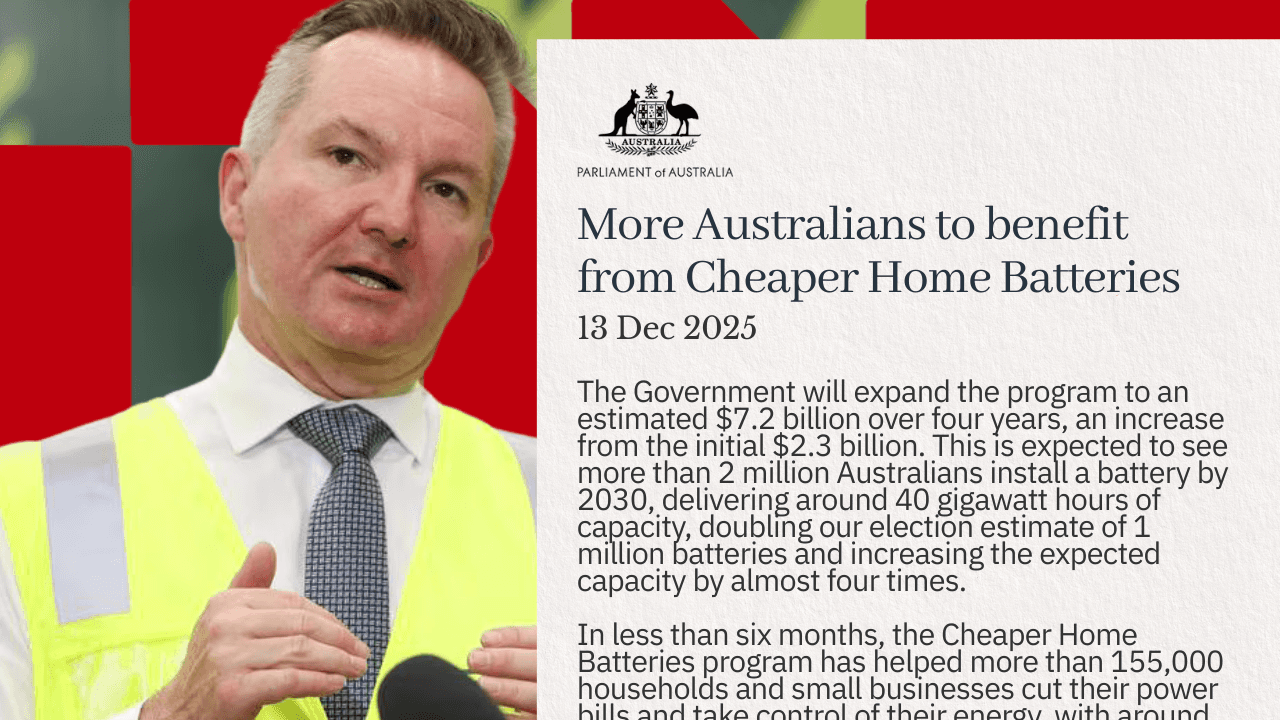
Since launching less than six months ago, the program has helped more than 155,000 households and small businesses install batteries and cut their power bills, with around three-quarters of installations in suburbs and regional areas. The 3.5 gigawatt hours of battery storage delivered during this period has increased home battery capacity in Australia to almost twice the level before the program, with half of these households also installing solar panels for the first time or upgrading existing systems.
The program provides households, businesses, and community organisations with a discount of around 30% on the upfront cost of installing battery systems between 5 kilowatt hours and 100 kilowatt hours. Climate Change and Energy Minister Chris Bowen stated that stored rooftop solar via batteries plays an increasingly important role in smoothing out evening demand and reducing peak pricing, which benefits all bill payers. Data from the Australian Energy Market Commission found that increased home battery uptake could deliver a 3% reduction in bills annually across the energy system.
From 1 May 2026, the government will introduce adjustments to ensure the discount encourages households to install appropriately sized batteries for their needs while keeping the program sustainable. Under a tiered system, support will be staggered based on battery size, with support moderating per kilowatt hour for medium and larger batteries. The first 50 kilowatt hours of a system remains eligible for support, for battery systems sized up to 100 kilowatt hours.
Key achievements:
Program expanded from $2.3 billion to $7.2 billion over four years
More than 155,000 batteries installed in less than six months
3.5 gigawatt hours of storage capacity added to the grid
Expected to support 2 million installations by 2030, delivering 40 gigawatt hours
Increased battery uptake projected to reduce energy bills by 3% annually
[1] https://www.dcceew.gov.au/energy/programs/cheaper-home-batteries
[2] https://www.dcceew.gov.au/about/news/six-months-cheaper-home-batteries-program
[3] https://cer.gov.au/news-and-media/news/2025/december/changes-to-cheaper-home-batteries-program
Updated: